
 Czechia
 Slovakia
 Poland
 Worldwide


Living containers
The use of residential and commercial containers is growing, and with it the requirements of manufacturers for their surface treatment are also expanding and specifying. Both special two-component materials and more traditional solvent-based synthetic coatings are represented, and again, in-house development and technical service are required.
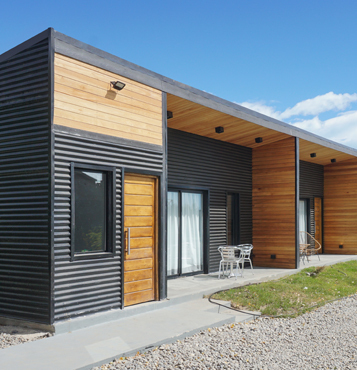
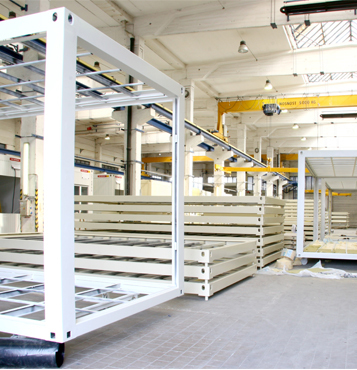
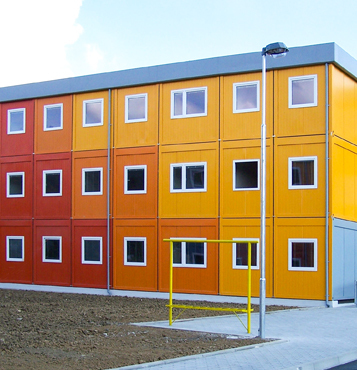
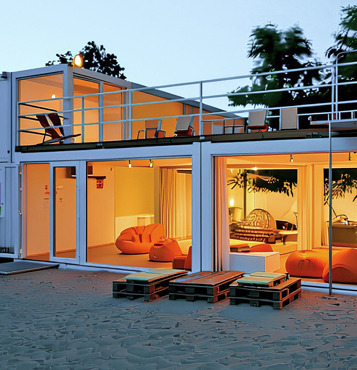
Surface treatment of residential containers
The choice of suitable coatings for a specific application is influenced by many technical and economic parameters, the importance of which may not be the same in every situation. It is necessary to take into account the corrosive aggressiveness of the environment, the required service life of the treated surface, maintenance and restoration options, aesthetic requirements, hygiene and environmental regulations, the suitability of the application equipment and, of course, a summary of the properties determining the given coating, such as drying speed, workability time, shade range, application options, etc.
Examples of recommended coating systems for residential containers can be downloaded here.
In addition to various spraying methods (conventional air, with air addition, high-pressure), there is painting with a brush or roller. Practical experience shows that for applying the first layer (basic anti-corrosion paints and single-layer paints), the best method is painting with a brush or airless spraying. To ensure the most uniform film thickness, it is advisable to always apply cross-coatings if possible. Particular attention should be paid to edges, corners and hard-to-reach areas. Before applying by machine, it is advisable to pre-coat these areas manually to achieve the required film thickness.
The viscosity of the paint supply is usually adjusted for the selected application technology using prescribed thinners.
The most suitable coating system designs for specific cases will be prepared for you by the technical service department.